Insights & Research

Thinking differently about team performance.

Research, observations and practical thinking about what helps capable people perform effectively together, and what gets in the way.

Team Performance Leadership Organisational Development Research & Evidence

Latest Insights

Practical thinking for better team performance.

Explore the latest research, observations and practical ideas from One Degree on team performance, leadership and organisational development.

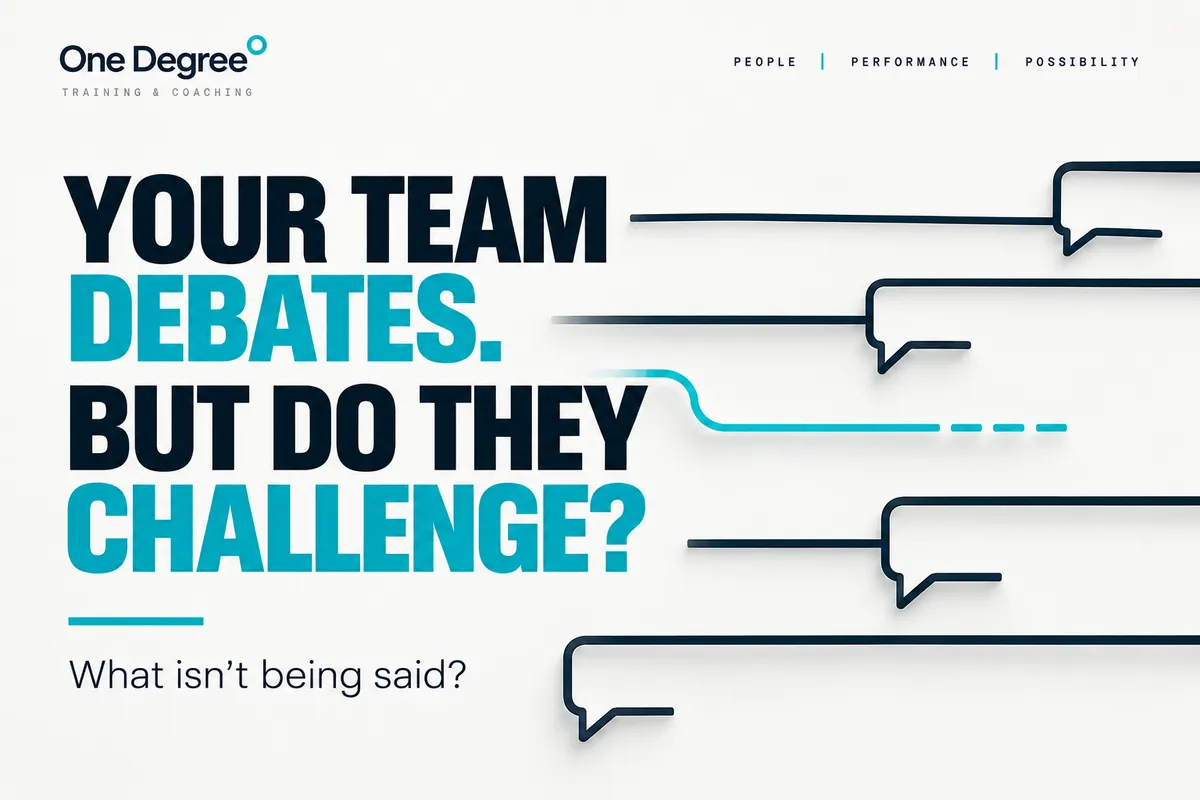
Just Because Your Team Doesn't Argue Doesn't Mean It's Healthy

Just Because Your Team Doesn't Argue Doesn't Mean It's Healthy

Just Because Your Team Doesn't Argue Doesn't Mean It's HealthyAndy Nisevic
Published on: 28/09/2026

A team can debate, contribute ideas and appear perfectly aligned while still avoiding the conversations that matter. Explore organisational silence, artificial harmony and what constructive challenge really looks like.

Amy Edmondson psychological safety definitiondifference between psychological safety and comforthigh performing teamshow leaders accidentally silence teamsimproving team performancepromotive vs prohibitive voicewhy employees don't speak up at workhigh-performing team

Psychological Safety vs Accountability in Teams

Psychological Safety vs Accountability in Teams

Psychological Safety vs Accountability in TeamsAndy Nisevic
Published on: 14/09/2026

Think psychological safety means keeping your team comfortable? Discover why high performance requires productive conflict, accountability, and the courage to speak up.

team psychological safetyimproving team performancehigh performing teamspsychological safety and accountabilityhow to handle task conflict in teamswhy employees don't speak up at workbuilding a culture of honest feedbackdifference between psychological safety and comforthow leaders accidentally silence teamsAmy Edmondson psychological safety definitionimplicit voice theories leadershippromotive vs prohibitive voice
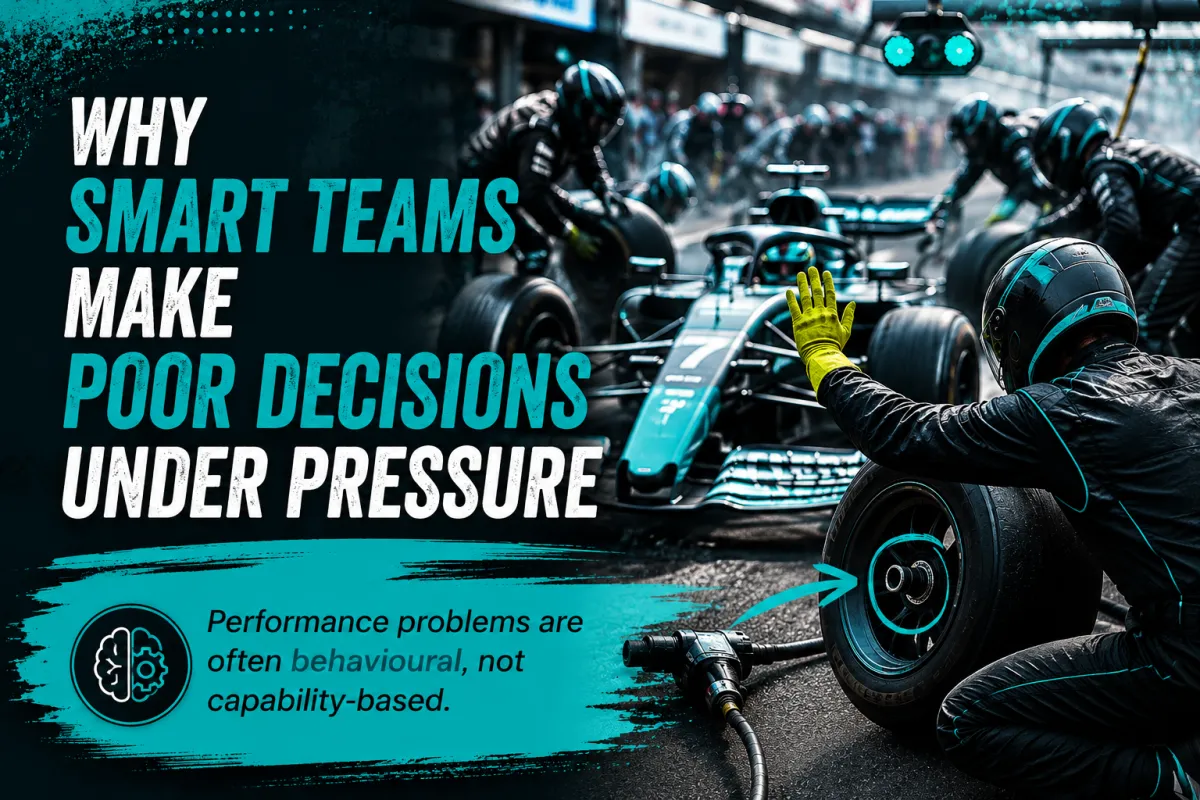
Why Smart Teams Make Poor Decisions Under Pressure: A Performance Problem, Not A Capability Problem

Why Smart Teams Make Poor Decisions Under Pressure: A Performance Problem, Not A Capability Problem

Why Smart Teams Make Poor Decisions Under Pressure: A Performance Problem, Not A Capability ProblemAndy Nisevic
Published on: 08/06/2026

Pressure doesn't make capable people less capable. It changes how they think and behave. Discover why smart teams make poor decisions under pressure and how hidden behavioural patterns create costly mistakes, delays and rework.

Team PerformancePressureDecision-makingPsychological safetyTeam Performance CoachingTeam CoachingHigh Team PerformanceTeam Communicationdecision making under pressureteam performance under pressurepoor decision making at workcommunication breakdown in teamspsychological safety and performancewhy teams make mistakeshigh performing teams under pressurepressure driven mistakesteam communication under pressureperformance improvement in constructionperformance improvement in manufacturingwhy smart teams make poor decisions under pressurewhy capable teams underperformwhy experienced teams make mistakeshow pressure affects decision making at workhow pressure affects team performancecommunication breakdown under pressurewhy employees don't speak up at workpsychological safety in construction teamsteam performance coaching for manufacturing companiesteam performance coaching for construction companiesteam performance coaching for engineering companieshow to improve team performance under pressureconstruction team performanceengineering team performancemanufacturing team performanceproject team communicationproject delivery performancereducing rework in constructionreducing rework in engineeringreducing rework in manufacturingreducing reworkreducing project delaysimproving operational performance

Start With Your Team

Turn the thinking into something useful.

If something you've read has made you question how effectively your team is performing together, the Team Performance Scorecard is a useful place to start. It gives you a structured way to consider where performance may be getting lost and where there may be opportunities to improve.